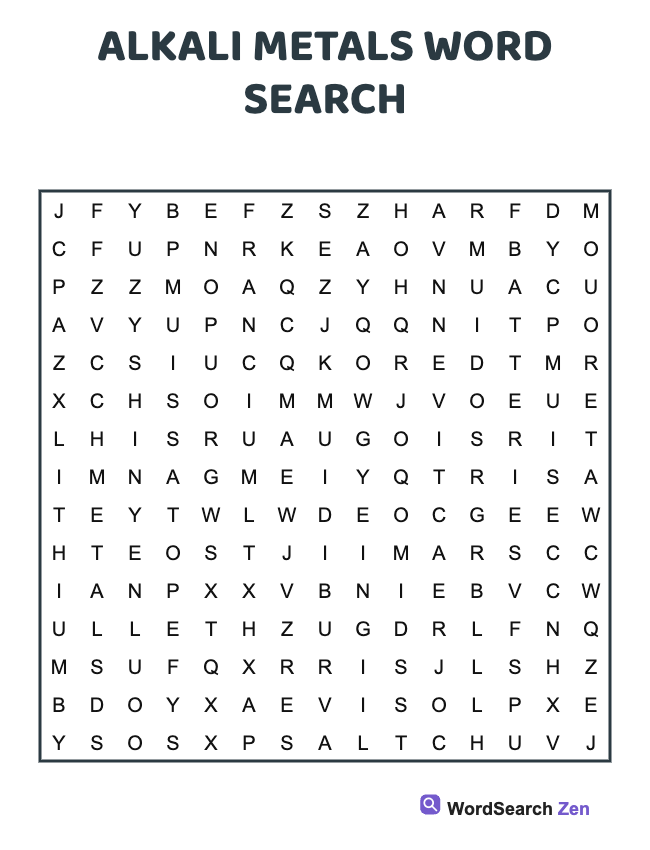
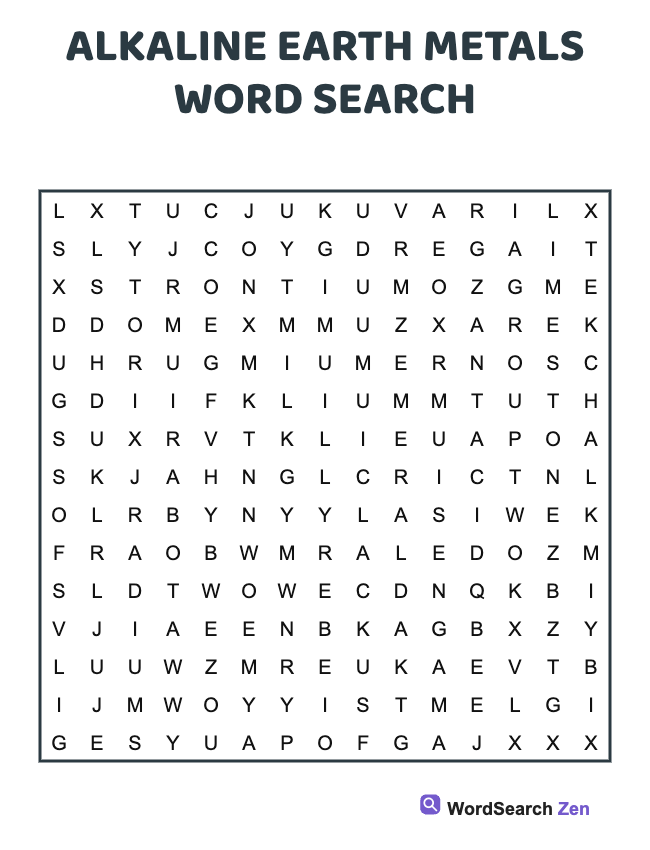
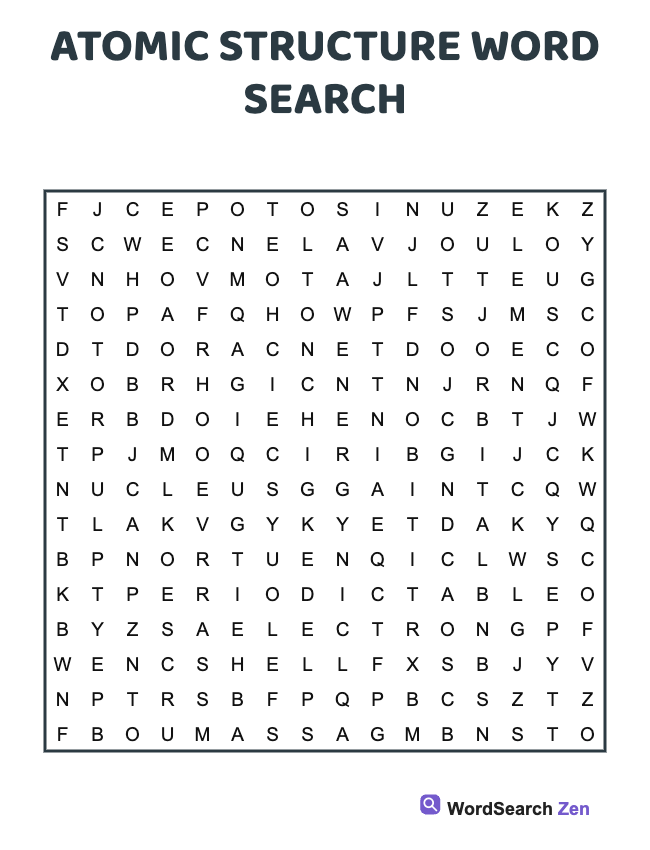
Download and print free periodic table word searches — fifteen puzzles that work across the table group by group, from the alkali metals and noble gases to the halogens, the transition metals and the rare earths. Every puzzle is a free PDF with the answer key included, sized for standard printer paper and ready for a chemistry starter, a revision session or a cover lesson.
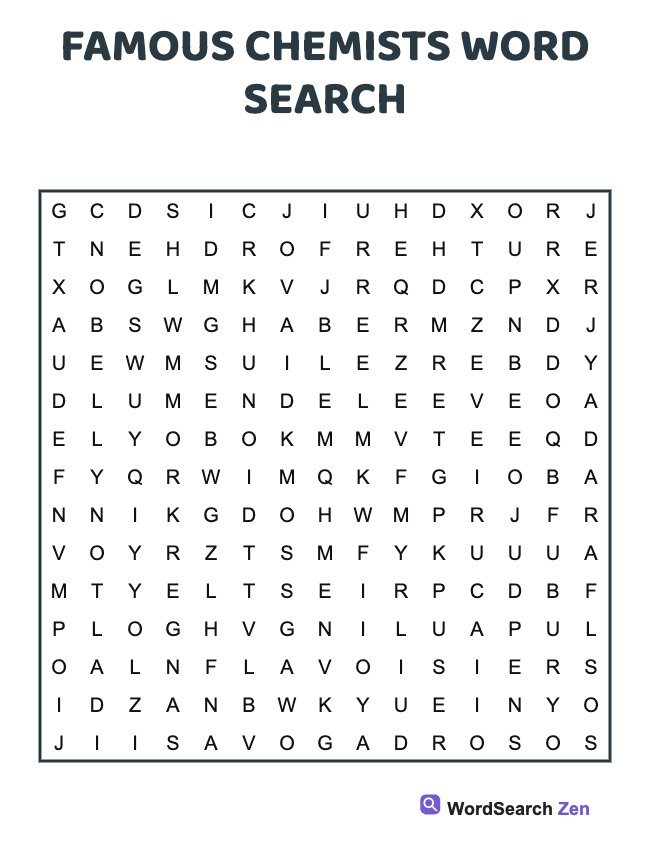
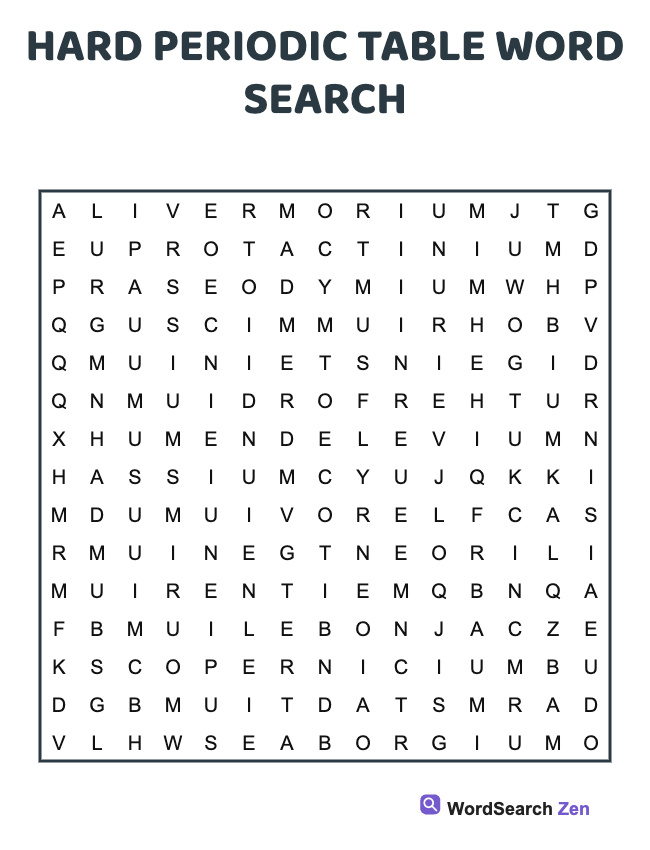
Each grid is built around one part of the table rather than a general science word list. The noble gases puzzle hides OGANESSON and KRYPTON. The transition metals puzzle runs from IRON to PALLADIUM. The hard puzzle is made entirely of the longest element names on the table, including RUTHERFORDIUM and DARMSTADTIUM, and the history puzzle follows the table from DOBEREINER’s triads to MENDELEEV’s predictions.
For a single mixed puzzle of everyday elements, try the chemical elements word search. The wider chemistry word searches cover bonding, reactions and lab equipment.
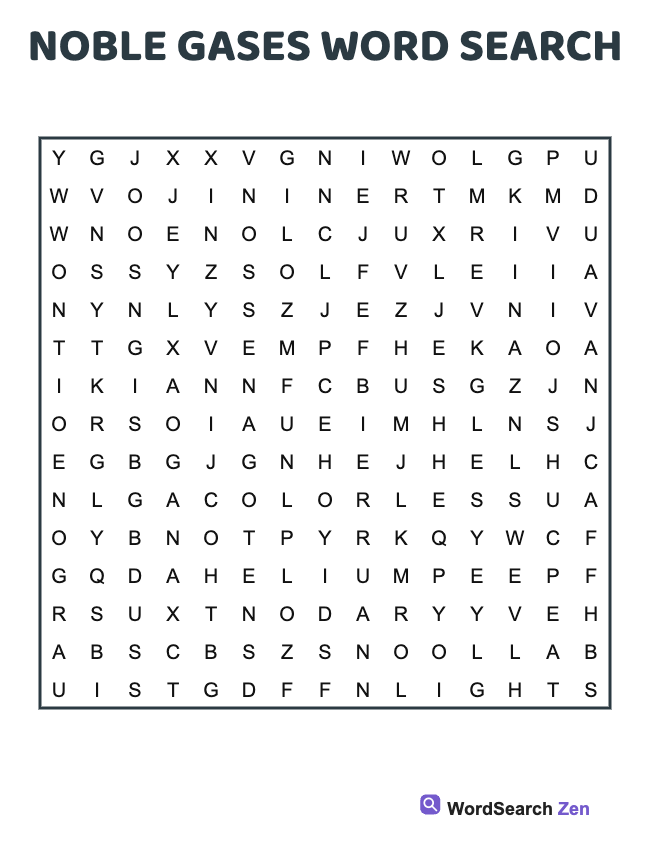
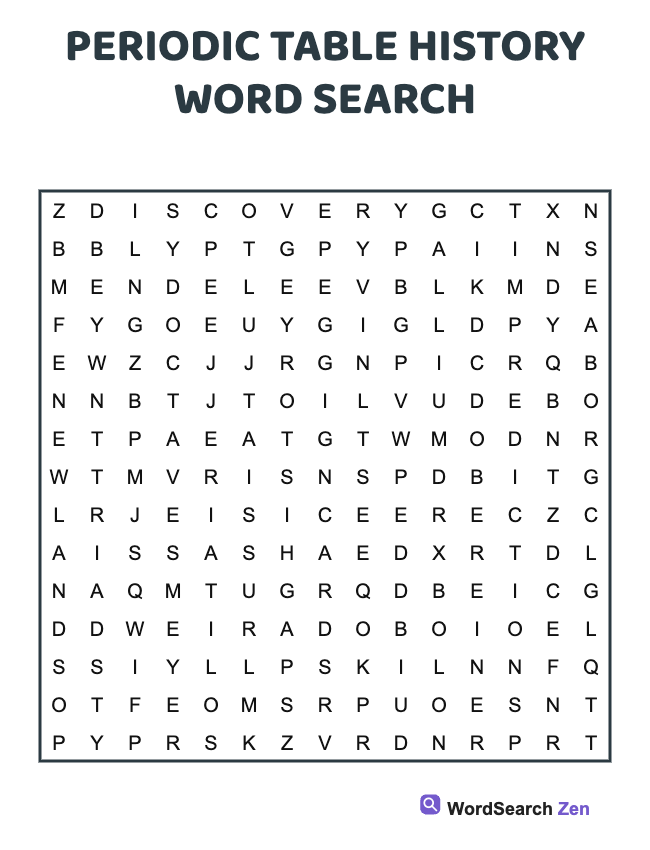
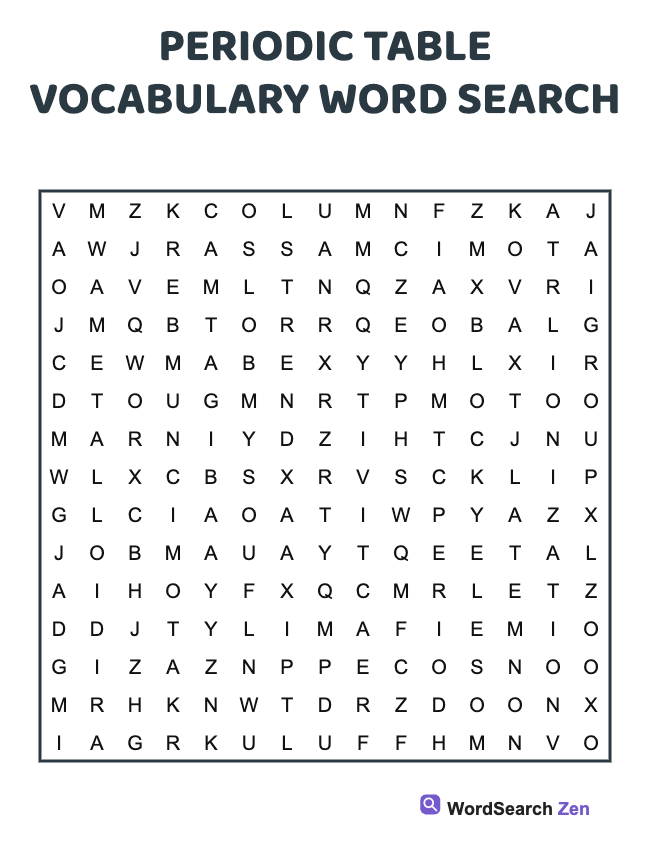
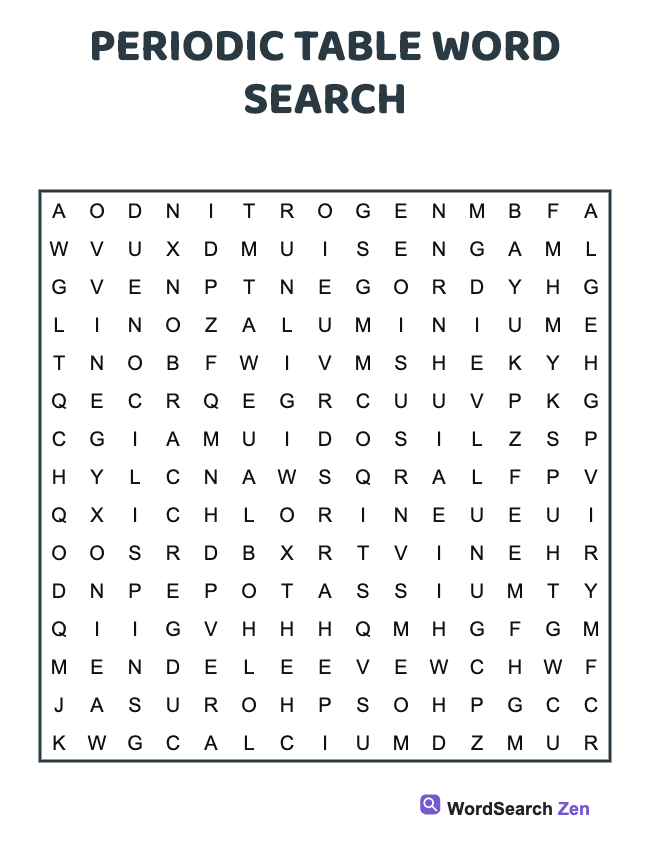
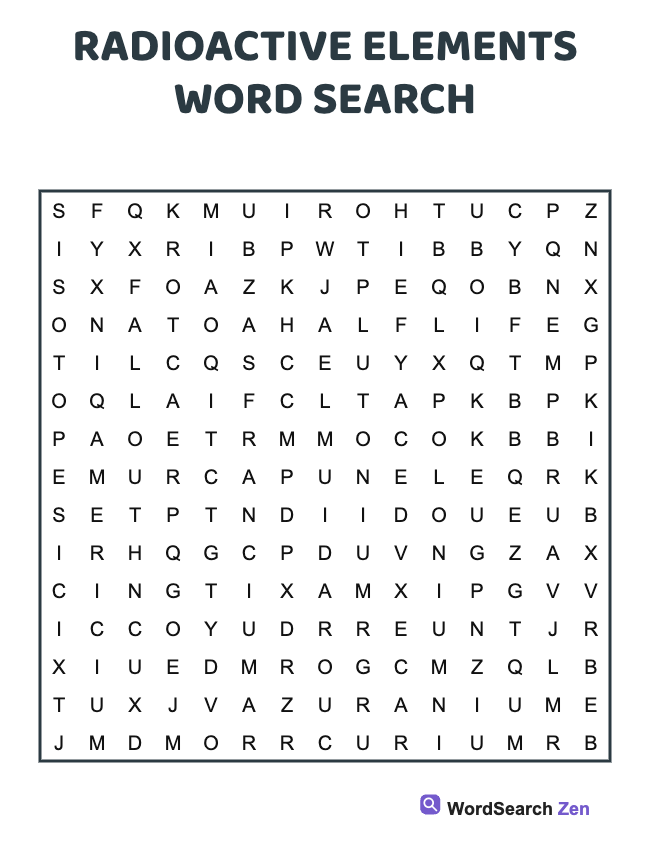
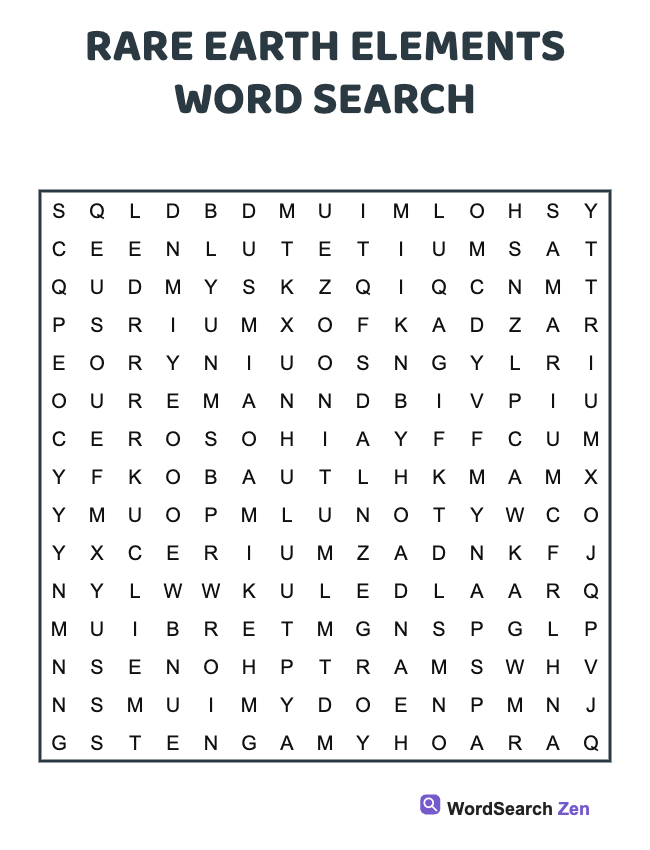
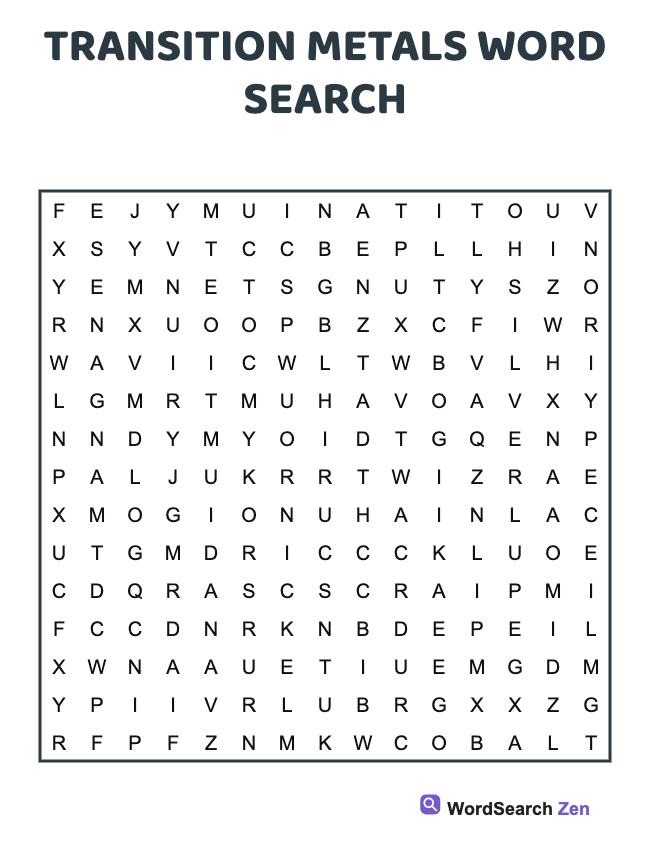
Built Around the Periodic Table
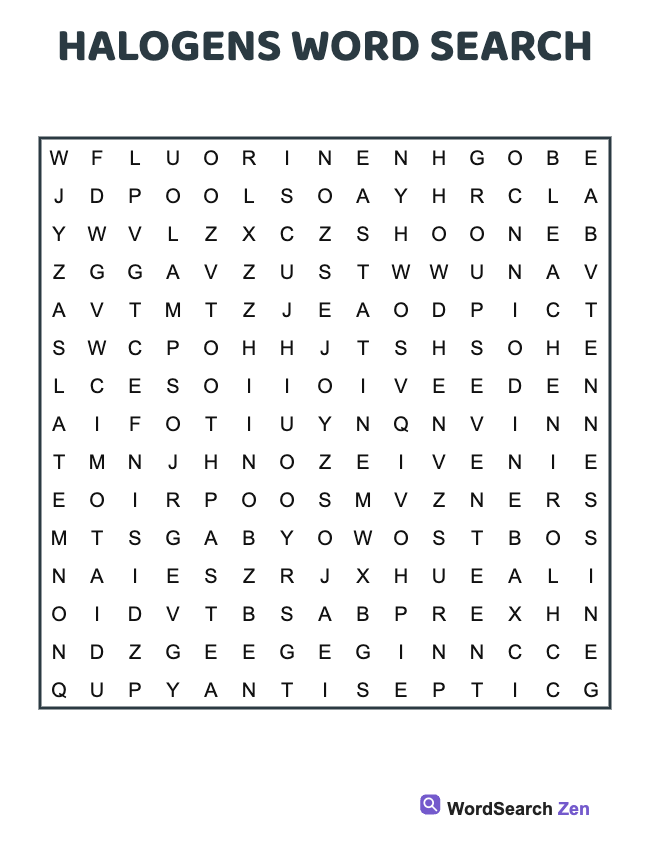
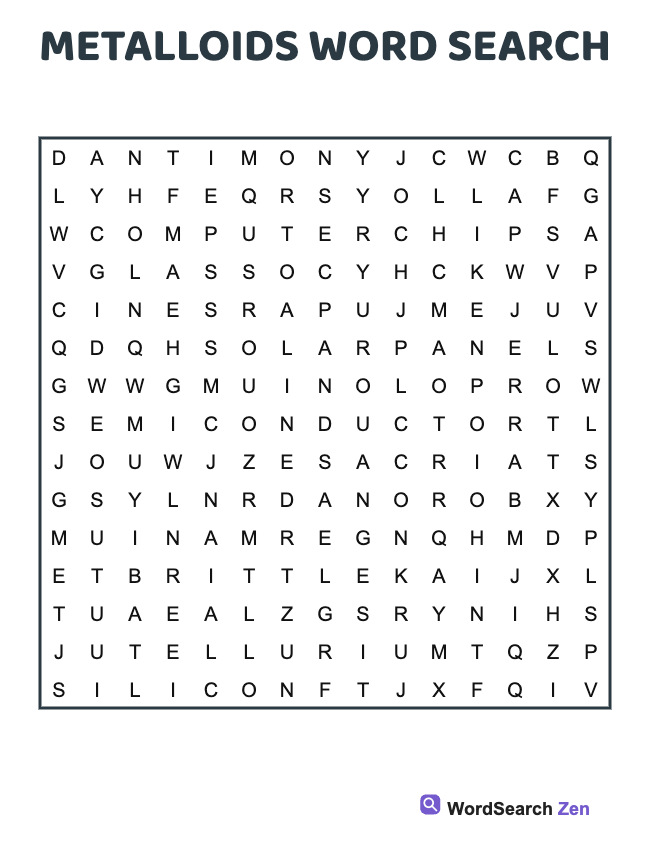
The puzzles follow the layout of the table itself: the reactive alkali and alkaline earth metals on the left, the transition metals across the middle, the metalloids along the staircase, then the halogens and noble gases on the right. The rare earth and radioactive puzzles cover the two rows usually printed below the main table. A vocabulary puzzle covers the terms students need to read the table (period, group, atomic number, atomic mass), and there are puzzles on atomic structure and on the chemists behind the discoveries.
What’s in Every Puzzle
Each download is a two-page PDF: the puzzle grid on page one, the completed answer key on page two. Fifteen words per grid, hidden in every direction. Nothing to sign up for and nothing to install — click a card, print the page.
How to Use These Periodic Table Word Searches
Use one as a five-minute starter before a lesson on a group of elements, or hand out the matching grid as each group is taught. The answer key doubles as a spelling list for the element names. The kids’ puzzle suits students from about eight; the hard puzzle is a real challenge for older students and adults.